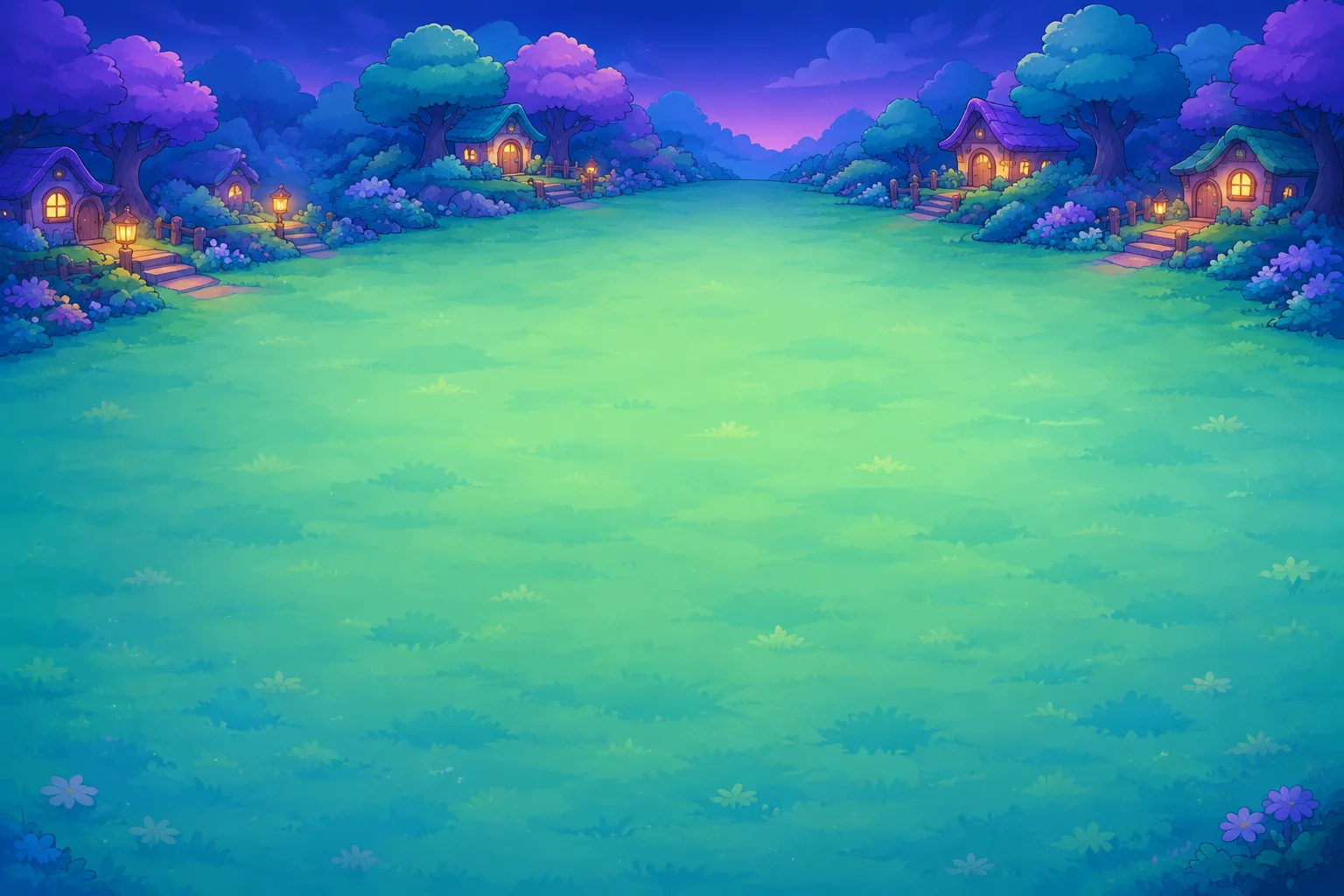
The home screen became a village. There is a creature to find, a climb to make, and somewhere for a captured creature to live. I wanted the first thing they saw to give them a reason to be there.
A math game for my kids.
I started Times Tower because I wanted my kids to feel at home with numbers. To see the beauty of math, and have a foundation they could keep building on.
Then we used it. Fifteen questions in a sitting wore them out. One of my kids wanted to stop when the heading said “Operations & algebra.” She kept going for Lamplet.

Times Tower is the math world inside Tiny Rivals, a collection of browser games I've been building with my family.

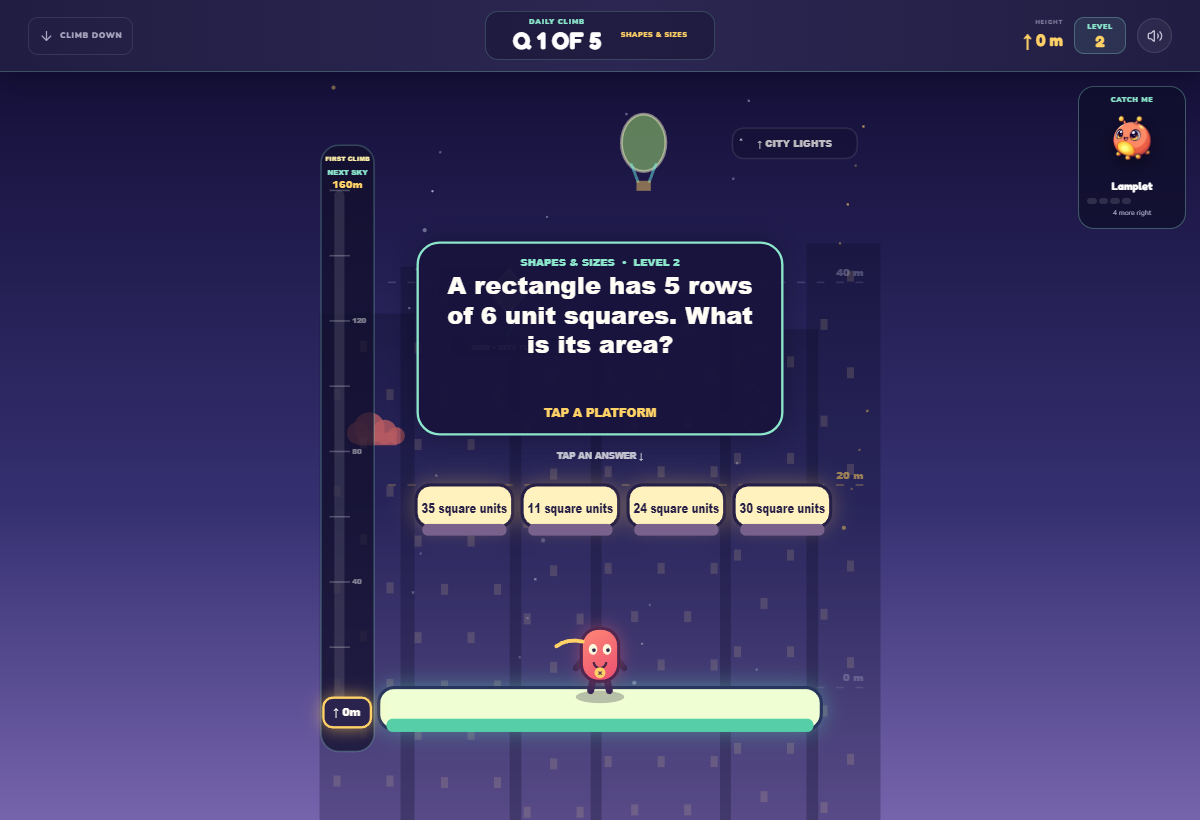
The game, September 2026.
The creature stays.
A fact can slip after a child has learned it. That means it needs another visit. I didn't want that to mean losing something they'd earned.
So a captured boss stays in the collection, even when its fact comes back for review. The learning record can change without taking the creature away.
Underneath the game, each fact has a history. Accuracy, response time, and time since the last review all matter. I wanted to know what a child could remember after some time away. A helped answer and an independent one should count differently.
A closer look at the practice
During fact practice
Time to work it out
Answer platforms give the child a way in. There is no visible countdown. Taking time to think does not trigger a timed fall.
Response time informs the learning engine quietly.I had built a lot of answering.
There was a problem with where that led. An explanation often appeared after a miss. A child who got the answer right could pass straight through without ever exploring the idea.
I wanted them to be able to make something and see what the mathematics did. That led to a garden, with a fixed amount of fence.
27squares of ground
Slide slowly. The same fence can hold a different amount of ground.
The fence hasn't changed, but the space inside has. You can feel your way to that before you know a formula for it.
This is a small version of the idea. In Times Tower, children can pin gardens, compare them, and keep one in their village. The biggest garden doesn't have to be the one they want to keep.
I'm still working out whether this leads where I hope it will. Does a child come back to a garden because they want to try something? Does an idea turn up later, away from the screen?
I can record the practice. Those questions need time with the kids.
Elliott · September 2026
Sources and learning research
The design draws on retrieval practice and spacing. These studies inform the principles; they do not evaluate Tiny Rivals or validate its particular review schedule.
- Roediger & Karpicke · Test-Enhanced Learning (2006)
- Karpicke & Bauernschmidt · Spaced Retrieval (2011)
This account draws on the project's design notes and decisions recorded while building with my family. The screens were captured on September 8, 2026; the artwork comes from Times Tower. The small interactions here illustrate the decisions.